
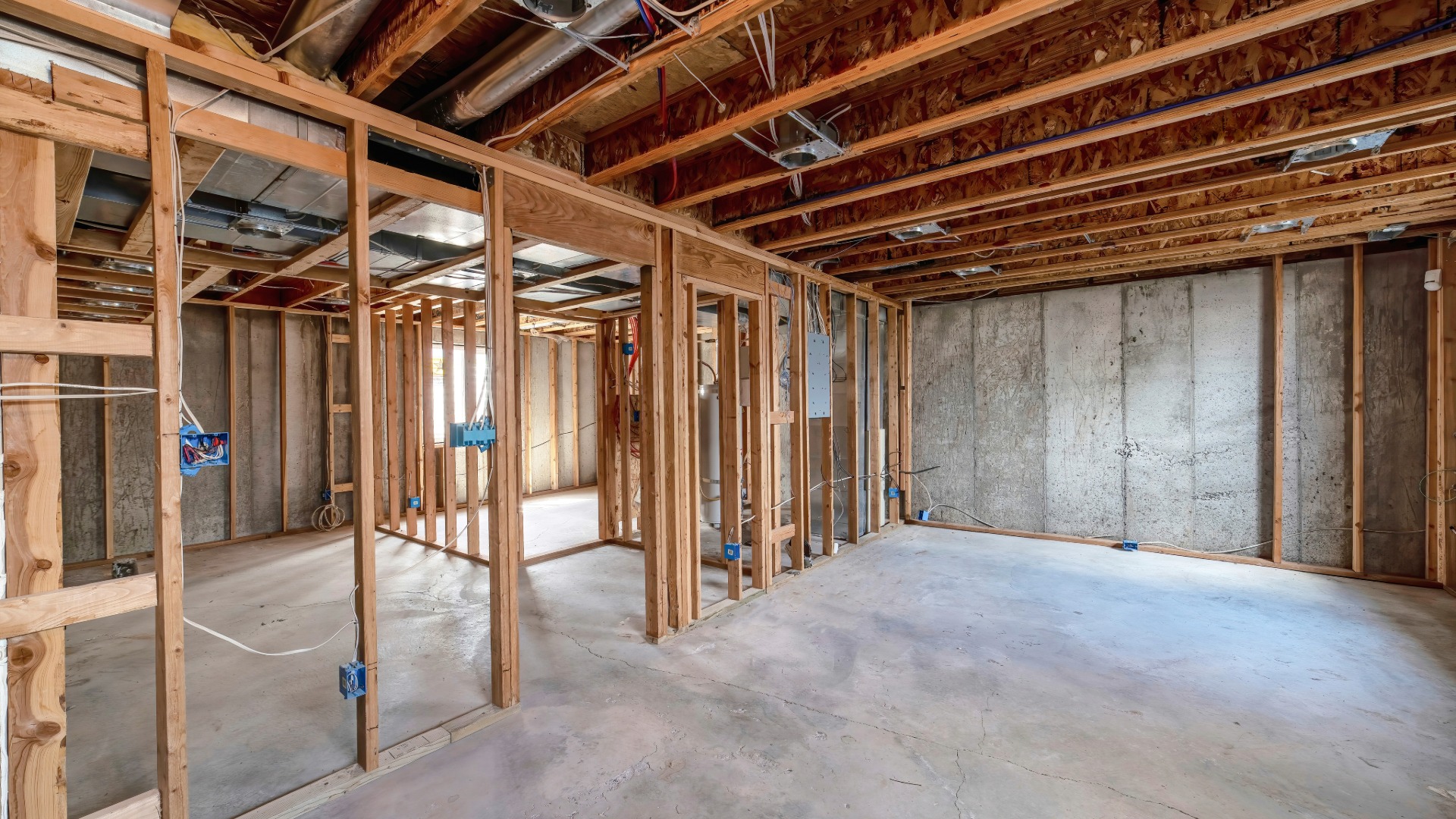
Choosing the Right Foundation for Your Lot: Slab, Crawlspace, Basement or Walkout Basement?
Why Your Foundation Choice Matters
When you picture your dream home, you may think about the exterior style, the kitchen layout, or the number of bedrooms. But beneath it all lies one of the most important decisions you’ll make: the foundation.
Choosing the best foundation type for your house isn’t just about budget. It affects comfort, storage, energy efficiency, and resale value. The right choice also depends on your lot conditions, soil type, and regional climate. Most modern house plans are drawn to accommodate multiple foundation types—commonly slab, crawlspace, basement, or walkout basement.
Slab Foundation

What It Is
A slab foundation is a flat, single layer of concrete, typically 4–6 inches thick, poured directly onto a prepared gravel base. Unlike basements or crawlspaces, there’s no hollow space beneath the home—the slab itself sits directly on the ground. Reinforcing steel bars (rebar) are often embedded in the slab for added strength, and insulation may be added around the edges to improve energy efficiency. Because of its simplicity and durability, the slab has become one of the most common foundation types in the U.S., especially in warmer regions.
Pros
- Cost-effective: Usually the least expensive option.
- Fast construction: Fewer steps mean a quicker build.
- Durability: Less risk of mold, pests, or rot below grade.
- Energy efficiency: No underfloor air space to leak.
Cons
- Limited access: Embedded utilities are harder to repair.
- No storage: No added space below the home.
- Comfort: Floors can feel cooler without added insulation.
Best For
Flat lots in warmer climates where frost depth is minimal; common across the South and West.
Crawlspace Foundation
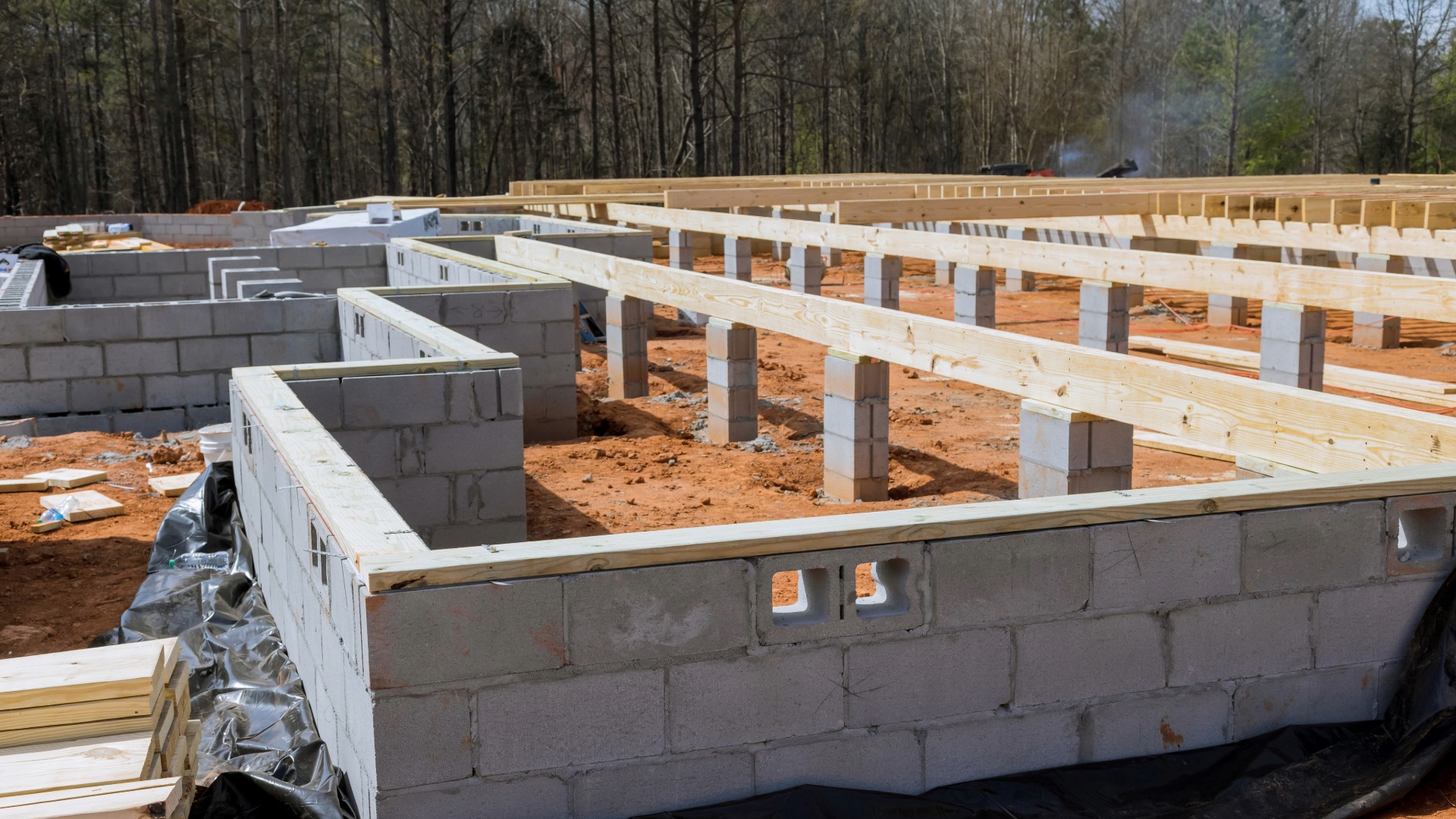
What It Is
A crawlspace foundation lifts the home slightly above the ground, usually 18–48 inches, creating a shallow unfinished space below the floor system. The crawlspace is enclosed by short perimeter walls or piers and can be vented or sealed depending on climate needs. While you can’t stand upright inside, this small space provides easier access to plumbing, electrical, and HVAC systems, which are typically routed beneath the home. Crawlspaces are especially common in areas with mild slopes or moderate climates, offering a balance between cost, accessibility, and protection against minor moisture concerns.
Pros
- Easy access: Simpler maintenance of plumbing/HVAC.
- Ventilation: Keeps moisture away from living areas.
- Elevation: Some protection against minor flooding.
- Moderate cost: Typically between slab and basement.
Cons
- Moisture risk: Needs proper sealing and drainage.
- Limited storage: Not tall enough for real use.
- Temperature swings: Insulation required for comfort.
Best For
Lots with slight slopes in moderate climates; a balance of accessibility and cost.
Basement Foundation
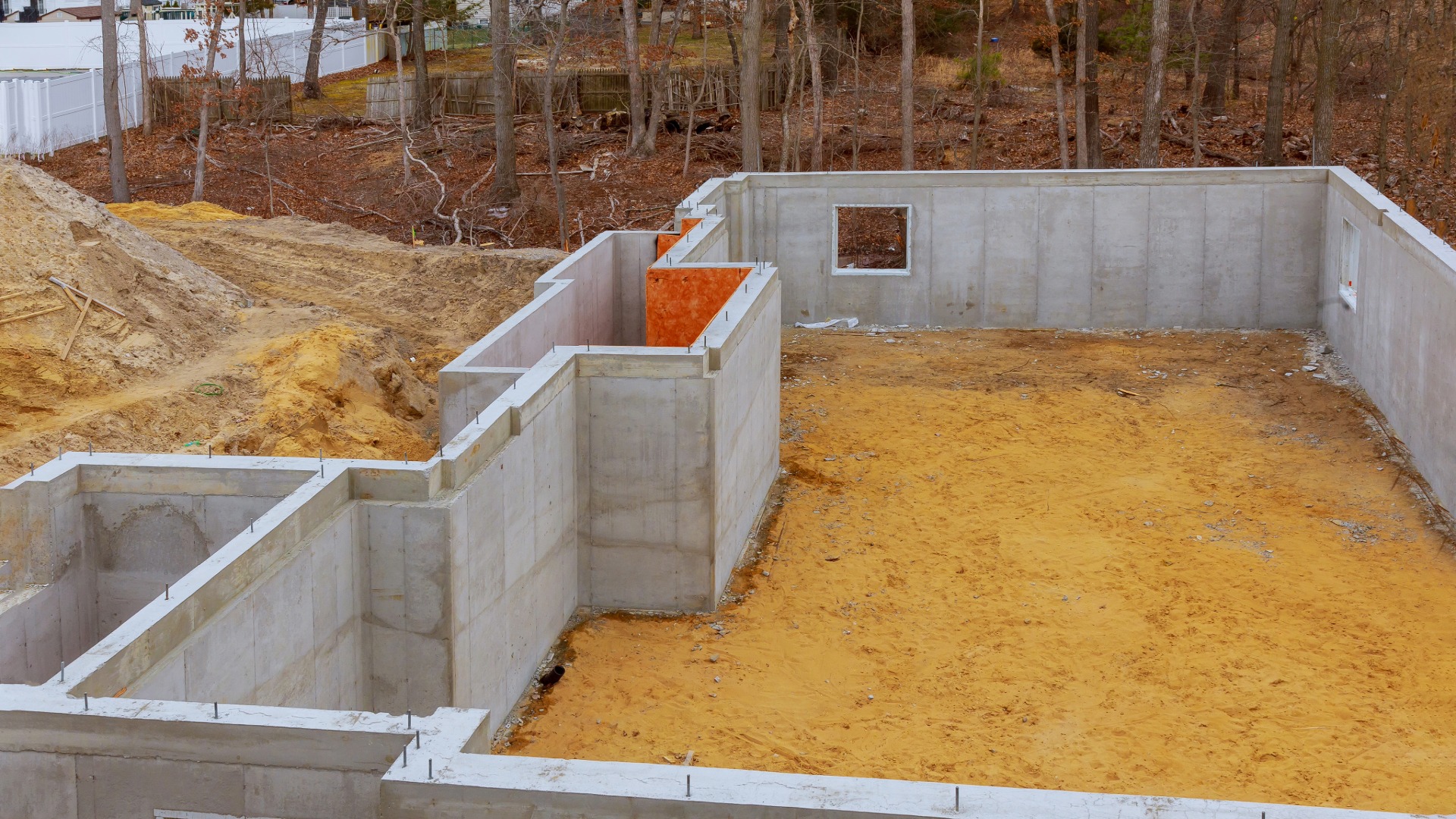
What It Is
A basement foundation extends the home’s footprint downward, creating a full-height living or storage space beneath the main floor. Typically 7–9 feet tall, a basement is formed by excavating the lot, pouring concrete footings and walls, and then finishing the floor with a concrete slab. Basements can be left unfinished for utility and storage, or finished to add significant living space such as bedrooms, family rooms, or home gyms. Because of their depth and durability, basements are especially popular in northern climates where frost lines require deeper foundations anyway, making the additional cost worthwhile.
Pros
- Extra living space: Potentially doubles usable area.
- Storage: Room for mechanicals and seasonal items.
- Value: Finished basements can boost resale.
- Energy: Below-grade walls provide natural insulation.
Cons
- Higher cost: Excavation and concrete walls add expense.
- Moisture: Requires waterproofing and drainage planning.
- Timeline: More steps than slab/crawlspace.
Best For
Cold climates (Midwest/Northeast) where deep footings are required; maximizes value and flexibility.
Walkout Basement Foundation
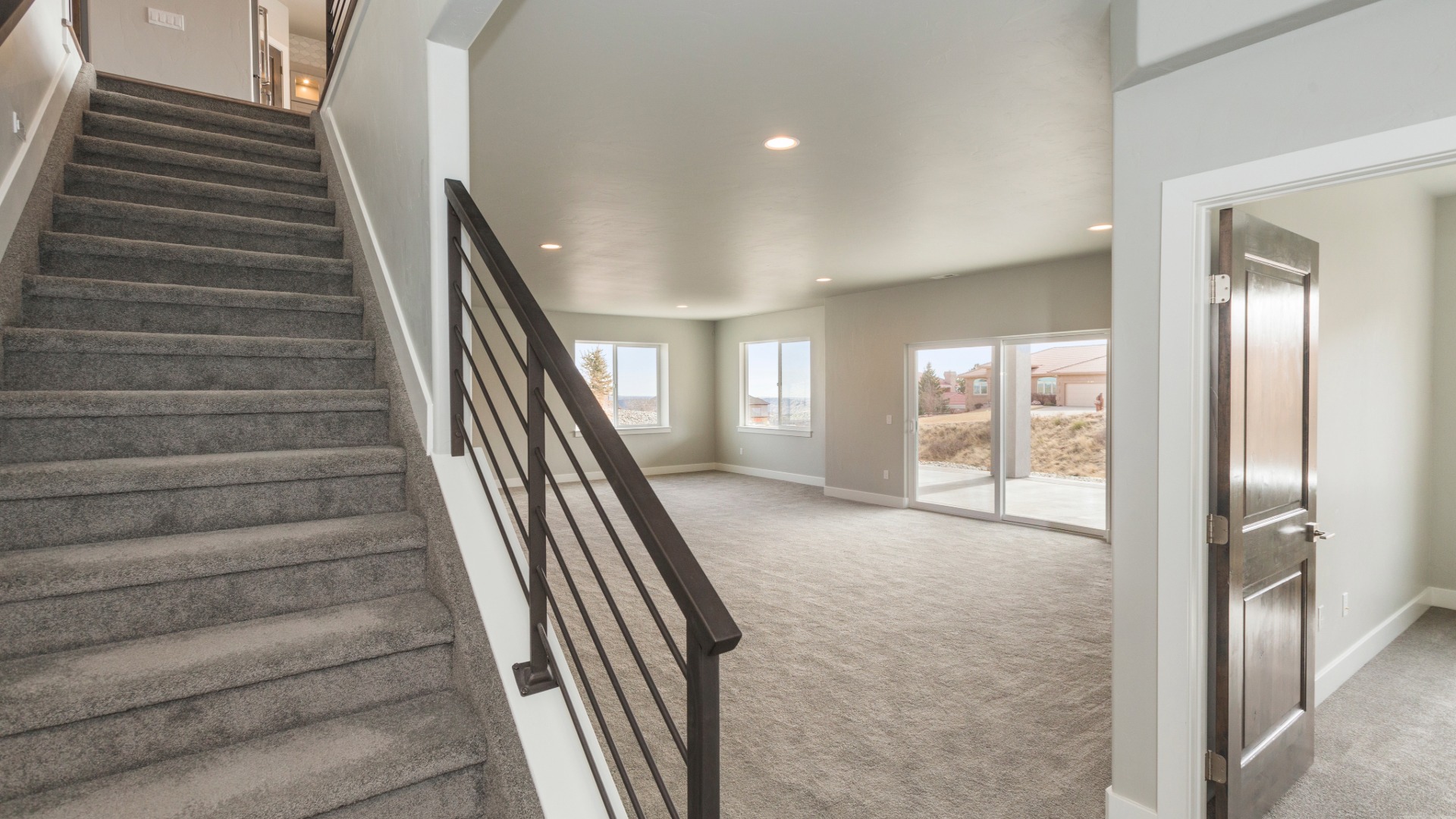
What It Is
A walkout basement is a variation of the traditional basement designed for sloped lots. One side of the basement remains below grade, while the opposite side opens directly to the outdoors through full-size windows and doors. This creates a bright, livable lower level that feels like an extension of the main house rather than a dark utility space. Walkout basements often lead directly to a patio, pool, or backyard, making them ideal for families who want seamless indoor-outdoor living. Because they take advantage of a lot’s natural slope, walkout basements are a favorite choice for hillside or scenic properties.
Pros
- Natural light: Bright, livable lower level.
- Direct access: Seamless indoor–outdoor connection.
- Flexible use: Guest suite, rec room, or rental.
- Value: Highly appealing to buyers.
Cons
- Lot dependent: Needs adequate slope.
- Added cost: Grading/design adjustments.
- Moisture management: Careful drainage required.
Best For
Hillside or sloped lots, especially where views and backyard access matter.
Regional and Site Considerations
- Cold northern climates: Basements common due to frost-depth footings.
- Hot southern regions: Slabs dominate for cost and simplicity.
- Moist/flood-prone zones: Crawlspaces or elevated slabs help mitigate risk.
- Hilly terrain: Walkouts turn slopes into assets with light and access.
Consult your builder and local building department. Soil testing, zoning, and neighborhood standards all influence the decision.
How House Plans Adapt to Foundations
Most stock plans can be ordered with multiple foundation options. Switching from slab to crawlspace or basement usually involves a small fee because structural details, stairs, and utility runs must be redrawn. Walkout basements require site-aware customization to match your slope, but many designers now offer walkout-ready versions.
Final Thoughts
- Slab: Affordability and simplicity.
- Crawlspace: Easier maintenance and slight elevation.
- Basement: Maximum space and cold-climate performance.
- Walkout basement: For sloped lots—light, access, and value.
Choosing the best foundation type for your house comes down to your lot, climate, budget, and lifestyle. Make an informed choice now to support comfort, durability, and long-term value.
👉 Explore thousands of house plans with customizable foundation options and find the design that fits your lot—and your life.




Leave a Reply